Pages

Showing posts with label Japanese. Show all posts

May 20, 2012

24. Recital, Kokkyou Junreika [Border Pilgrim Songs] - J. A. シーザー / J.A. Caesar [1973]


In his early 70s psycho-pomp, Julius Arnest Caesar (J.A. Seazer / J.A. Ceaser) conjured some unique concoctions on behalf of Shuji Terayama’s Tenjo Sajiki Theatre Company. An experimental blend of kosmische rock, dappled with Noh stylings and witchy women choruses for added weirdness. Not too preposterously seen as distant cousin to ISB’s “U” – a surreal parable in song and dance, as performed by Black Sabbath.

[Bonus in Comments: "Music that evokes the Khanate Golden Horde invading eastern Turkey, anyone? Yes, please."]


Oddi wrth y brawd

March 09, 2012

Opera from the Works of Tadanori Yokoo - Toshi Ichiyanagi [1969] RE-DUG


Prescient and unprecedented tribute to indeterminacy, electronic hiss, ruptured nostalgia, guitar / siren wail, ghostly future times past, patriotism, distant bells, radio transmission, tape manipulation, hubristic pre-war swagger, and in the end, friendship. For all the artiness of the undertaking - avant garde to the core - "Opera" is intensely autobiographical and engaging.

Ichiyanagi compares music to Japanese garden design: meticulous, painfully ordered yet always interacting with indeterminate elements - moisture, light, wind. Despite the self-declared tilt at natural multiplicity over concentrated construct, the do-it-yourself flow of patchwork elements benefits from intimate aleatoric framing. The details look after themselves.

To Tadanori Yokoo, Japanese pop design magus. Like Ichiyanagi, Yokoo's multi-layered approach is highly personal and gives the lie to easy comparisons, notably "the Japanese Warhol" moniker. Modus operandi converge. Yokoo saturating and manipulating popular by-gone images in bang up to date lysergic colour; Ichiyanagi knitting traditional enka  with musique concrète and psych feakout à la mode. Both artists tackle tricksy themes around nationalism and nationhood: Yokoo's risqué red sun ray flag (kyoku jitsu-ki) as recurring motif; Ichiyanagi's sampling of rousing miltary marching song. More cultural reclamation than the revivalist impulse that drove contemporary  - and Yokoo friend and influence - Mishima Yukio.


The “Opera” is a multi-media affair; the importance attached to the visual side of the production well ahead of its time. Attention to sonic and visual detail - however indeterminate -as meticulous as traditional Japanese art and crafts. The work is ahead of its time in other ways.


Side A


1 Aria ichi [Aria one]
Traditional ballad setting leit motif of melancholy nostalgia.

2 Erekutorikku chanto [Electric chant]
More hiss and whine than chant. "Chant" well-chosen, nevertheless, as sickly electronic  Buddhist drone morphs into air-raid siren. Cue martial brass band and military singing. Oppressive and rousing; attracting as it repels. 20 years later, the likes of Current 93 and Death In June would court controversy with similar use of Nazi martial tunes. No gimmicks here.

3 Otoko no junjo [Man’s pure heart]
Distant noises, footsteps, two men feeling their way into a song on skeletal piano. Complaining about the piano, they notice the environing silence:


"Everybody’s gone – nobody is watching. Should we continue when there is no one?"
Big question. Finally, free from background noise, the song is delivered in full.

Switch: crowd noise. Rumpus. Sports match? Riot? Protest? Woman sobbing  - fear or erotic excitement?

Low-flying aircraft passes overhead.

(1966, a group of Narita locals tool up with student activists and left-wing politicos forming Sanrizuka-Shibayama Union to Oppose the Airport)


Side B


4 Uchida Yuya to Za Furawaazu (Uchida Yuya and the Flowers)
27-minute long psych free form freak out. 20 mins. one side, remainder on next. Ichiyanagi let loose the reins on budding young psychonauts with the sole stipulation that the piece be titled after Yokoo's signature 1965 poster I Was Dead.

The central slogan on Yokoo's poster: “Having reached a climax at the age of 29, I was dead". Inkling that Ichiyanagi is having a joke at young gun expense.


Side C


5 Uchida Yuya to Za Furawaazu (Uchida Yuya and the Flowers)
Caution, mind melting in progress. 7 more minutes.

6 Nyuyooku no uta [New York song]
Poem recited in Edo-jidai Japanese, then contemporary dialogue and short monogatari. 

At this point, check again Ichiyanagi's integration of Yokoo thematic riffs. For instance, the "Opera" shares imagistic and sonic links to Yokoo's 1965 animation Kach Kachi Yama:


7 Kayo myuzikare [Kayo musicale]
Medley: radio jingles, random commentary, film excerpt (adult scolds initially recalcitrant but ultimately pliable young woman for accepting something from a stranger), and Meiji Chocolate ad given the full Group Sound treatment  chokoreeto – chokoreeto.  Switch: European church bells, harpsichord looped, echoed, deconstructed. Switch: sound of massive bombing raid. End.

Amounting to what? Let's venture: a comment on corrosive Western / capitalist influence? Whether low art  or high - reedy GS organ peddling chocolate or god pandering Bach keyboard -  the outcome obliterates.


Side D

8 Love Blinded Ballad Uta 1969 
Archival announcements, patriotic songs, marching fanfares, speeches, classical violin, military songs intermixed curvilinear fashion.  Whirlwind tour through 30s & 40s public sphere. Pervading unease and eeriness recalls Derrida's hauntology. Ichiyanagi way ahead of "nostalgia for the future" curve.

And blinded by love for what exactly? Patriotism....

9 Spite Song Uta 1969  Frogs croak, waterfowl cackle, crows caw; earlier patriotic choruses hover ghostly in the background. Tchaikovsky’s Swan Lake subjected to discordant squeaking as AM radio tunes in and out of romantic cliché to the point of unlistenability. Final transition to bombing alert siren comes as relief!

10 Takakura Ken, Tadanori Yokoo o utau [Ken Takakura sings to Tadanori Yokoo]

Or is it more an "All Clear" signal? That would make sense as next and last up is enka serenade by yakuza movie hard man Takakura Ken.


Ichiyanagi's choice of Takakura Ken is apposite and affectionate. Tadanori Yokoo provided commercial posters for several of Takakura’s gangster flicks and was obviously enamoured.

And so, a warm, personal ending to a disquieting, shattering journey. Enjoy the trip.

Oddi wrth y brawd

February 17, 2012

Mizutani - Les Rallizes De Nudes [1970]


Takashi Mizutani dials down wind tunnel squall and ups Velvets 3rd album laid back vibe. Sweet.


Oddi wrth y brawd

February 11, 2012

Tetsuo: The Iron Man - Chu Ishikawa [1988]


"Inside the flesh of an ordinary salaryman terrible things have begun to take place".

And then some.


Enervating industrial hammering and skittery hyperkinetic rhythms. A nerve shredding delight.


Oddi wrth y brawd

February 10, 2012

Merrinology / メリノロジー EP - Lion Merry / ライオンメリー [1983]


Now, where were we? Incommensurably wonky popfolktronic cross-dressing fiddlage from Japan...that would be about right.


Oddi wrth y brawd

January 03, 2012

Double Heads 1980-81 - Les Rallizes Denudes [Hadaka No Rallizes]


Enter Takeshi Mizutani's world of total cultural assault. These late period recordings dial down squall n sub bass battering  - juste un tad -  and so present excellent point of entry for the uninitiated.


Also, featuring far out Rallizes stalwart Fujio Yamaguchi.

Live 14 Aug. 1980
1-1. 造花の原野 (7:21)
1-2. 夜より深 (16:16)
1-3. 白い目覚め (6:24)


Live 14 Aug. 1980
2-1. 夜、暗殺者の夜 (12:27)
2-2. Fantastique (13:06)
2-3. 夜の収穫者達 (8:32)
2-4.The Last One (27:50)


Live 29 Oct. 1980
3-1. 夜より深 (15:43)
3-2. 氷の炎 (19:27)
3-3. 夜より深 Part 2 (11:00)


Live 29 Oct. 1980
4-1. Enter The Mirror (12:20)
4-2. 夜、暗殺者の夜 (13:22)
4-3. The Last One (19:23)


Live 23 Mar. 1981
5-1. 夜、暗殺者の夜 (16:00)
5-2. 夜より深 Part 2 (30:41)


Live 23 Mar. 1981
6-1. The Last One (24:24)
6-2. 氷の炎 (20:57)


Oddi wrth y brawd
1
2
3

October 08, 2011

Memories of Sasaki san - Mika Sasaki and Various Artists [2005]


Sasakisan's work collected n re-constructed by artists various: Greg Davis, Hans Appelqvist, Steve Roden included. Sasakisan be no musician in strict sense but prone withal to creating  journal-like pieces entire from cell phone melody composition tool. Skew whiff sketches in miniature. Nothing less than charming.


Oddi wrth y brawd

October 06, 2011

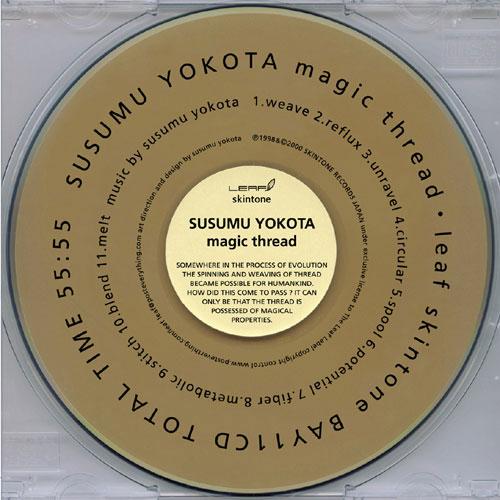
Magic Thread - Susumu Yokota [2000]


"Somewhere in the process of evolution the spinning and weaving of thread became possible for humankind. How did this come to pass? It can only be that the thread is possessed of magical properties."

Hmm...mebbe. What aint in doubt: fibrous electro-mutations n energetic beat systems, the weft of watery surround sound n hazy reflux unravelling fluid distortions n thrum. Occasional binaural scritchy warble spindling slow motion warp speed ambient.


Oddi wrth y brawd

October 05, 2011

パラダイス・オブ・レプリカ/パラダイス・オブ・リミックス - アフター・ディナー / After Dinner [1989/2001]


80s Japanese avant chamber pop: harp, cello, flute, clarinet, glockenspiel, tung-saio, hichirki, oboe, piano, keys, tapes, bird sounds. And timestopping vocals of Haco. 2001 reissue comes with international remixers - Terre Thaemlitz, Pascal Plantinga, Skist duo, n Joshua McKay - who update AD sound a la glitched out lo fi digital processing.  

Oddi wrth y brawd

October 04, 2011

頭脳警察 1 - 頭脳警察 / Zunou Keisatsu [1971]


Two chord protest mantra agin Japanese Man. Congas, bongos, strum-along acoustic n yawping vocals akin to politically dis-chuffed Tyrannousaurus Rex. Lyrics make about as much sense likewise. Get out in streets kid bruthas.


Oddi wrth y brawd

October 03, 2011

October 01, 2011

Anywhere - Flower Travellin' Band [1970]


"Flower Travellin' Band do not cover the song Black Sabbath. Instead, they let its tyres down and ride it across a ploughed field."
Japrocksampler


Oddi wrth y brawd

"We Are Here" - Flower Travellin' Band [2007]

Not a return to form so much as complete re-conception and, with Joe Yamanaka's recent  passing, finale. Folks looking for Satori TNG will be disappointed, n dat a shame. This new/closing chapter reveals a powerful, subtle unit taking equal parts psych rock, tropicalia, classic soul, reggae, New Orleans funk and nudging these forms into flexible, extended jams. Dark apocalyptic rage of old replaced with direct, clear eyed confidence.


Oddi wrth y brawd 
angiogenesis

September 25, 2011

April 30, 2011

Le Monde Fableux Des Yamasuki - The Yamasuki Singers [1971/2]


Mondo Nippon. Skewed fuzzed out pop Japonsime mental. Daniel Vangarde et Jean Kluger, arigato. Yamamoto moto kudasai. Kono samurai. Kono yaro. Ureshii.


Oddi wrth y brawd

April 16, 2011

Port Entropy - Shugo Tokumaru [2011]


Shimmery sweet sugar fix. Mebbe wee bit over-candied for some. Check out shugo's site. Boy's got talent. Toothsome.


Oddi wrth y brawd

March 19, 2011

Split - High Wolf / Masaki Nakazawa [2010]


Wobbly French loop adept High Wolf & guitar magus Masaki Nakazawa meet in monumental collaboration. Opening salvo's tribal skitter and echo - Snakes Threesome -  belongs to High Wolf. Folest, several milligrams higher up out under desert stars Nakazawa's unutterable, cataclysmic stoned guitar shredding. Burning, man.

Oddi wrth y brawd
on fire

February 06, 2011

Opera from the works of Tadanori Yokoo - Toshi Ichiyanagi [1969]


Prescient and unprecedented monument to indeterminacy, electronic hiss, ruptured nostalgia, guitar / siren wail, ghostly future times past, patriotism, distant bells, radio transmissions, tape manipulation, fatal pre-war swagger, and perhaps in the end, friendship. For all the artiness of the undertaking - avant garde to its core - the "Opera" is intensely autobiographical, entirely original and completely engaging.

Ichiyanagi compares music to Japanese garden design: meticulous, painfully ordered yet always interacting with indeterminate elements - moisture, light, wind. Despite Ichiyanagi’s self-declared tilt at natural multiplicity over concentrated construct, the do-it-yourself flow of patchwork elements benefits from an intimate aleatoric framing. The details look after themselves.

To Tadanori Yokoo, magus of Japanese pop design. Like Ichiyanagi, Yokoo's multi-layered approach is highly personal and gives the lie to easy comparisons, notably "the Japanese Warhol" moniker. Modus operandi converge. Yokoo saturating and manipulating popular by-gone images in bang up to date lysergic colour; Ichiyanagi knitting traditional enka  with musique concrète and psych feakout à la mode. Both artists tackle loaded themes of nationalism and nationhood: Yokoo's risqué red sun ray flag (kyoku jitsu-ki) as recurring motif; Ichiyanagi's sampling of rousing miltary marching song. More cultural reclamation than the revivalist impulse that drove contemporary  - and great Yokoo friend and influence - Mishima Yukio.


The “Opera” is a multi-media affair; the importance attached to the visual side of the production well ahead of its time. Attention to sonic and visual detail - however indeterminate -as meticulous as only Japanese traditional art and crafts can be. The work is ahead of its time in other ways, as we shall see. Arguably, the rest have yet to catch up.


Side A


1 Aria ichi [Aria one]
Traditional ballad setting leit motif of melancholy nostalgia.

2 Erekutorikku chanto [Electric chant]
More hiss and whine than chant. "Chant" well-chosen, nevertheless, as sickly electronic  Buddhist drone morphs into air-raid siren. Cue martial brass band and military singing. Oppressive and rousing; attracting as it repels. 20 years later, the likes of Current 93 and Death In June would court controversy with similar use of Nazi martial tunes. Ichiyanagi's ploy is utterly outrageous. No gimmicks here though and is of a piece with the pervasive tension  between comforting nostalgia and repellent militarism.

3 Otoko no junjo [Man’s pure heart]
Distant noises, footsteps, two men feeling their way into a song on skeletal piano. Complaining about the piano, they notice the environing silence:
"Everybody’s gone – nobody is watching. Should we continue when there is no one?"
Big question. Finally, free from background noise, the song is delivered in full.

Switch: crowd noise. Rumpus. Sports match? Riot? Protest? Woman sobbing  - with fear or erotic excitement?

A low-flying aircraft passes overhead.

(1966, a group of Narita locals residents combine with student activists and left-wing political parties to form Sanrizuka-Shibayama Union to Oppose the Airport)


Side B


4 Uchida Yuya to Za Furawaazu (Uchida Yuya and the Flowers)
 27-minute long psych free form freak out. 20 mins. one side, remainder on next. Ichiyanagi let loose the reins on budding young psychonauts with the sole stipulation that the piece be titled after Yokoo's signature 1965 poster I Was Dead.

The central slogan on Yokoo's poster: “Having reached a climax at the age of 29, I was dead". An inkling that on one level Ichiyanagi is having a joke at young gun expense.


Side C


5 Uchida Yuya to Za Furawaazu (Uchida Yuya and the Flowers)
Caution, mind melting in progress. 7 more minutes.

6 Nyuyooku no uta [New York song]
Poem recited in Edo-jidai Japanese, then contemporary dialogue and short monogatari.

At this point, check again Ichiyanagi's integration of Yokoo thematic riffs. For instance, the "Opera" shares imagistic and sonic links to Yokoo's 1965 animation Kach Kachi Yama:


7 Kayo myuzikare [Kayo musicale]
Medley: radio jingles, random commentary, film excerpt (adult scolds initially recalcitrant but ultimately pliable young woman for accepting something from a stranger), and Meiji Chocolate ad given the full Group Sound treatment  chokoreeto – chokoreeto.  Switch: European church bells, harpsichord looped, echoed, deconstructed. Switch: sound of massive bombing raid. End.

Adding up to what? Let's venture: a comment on corrosive Western / capitalist influence? Whether low art  - reedy GS organ peddling chocolate - or high - Bach keyboards selling God -  the outcome obliterates.


Side D

8 Love Blinded Ballad Uta 1969 
Archival announcements, patriotic songs, marching fanfares, speeches, classical violin, military songs intermixed curvilinear fashion.  Whirlwind tour through 30s & 40s public sphere. Pervading unease and eeriness recalls Derrida's hauntology. Ichiyanagi way ahead of "nostalgia for the future" curve.

And blinded by love for what exactly? Patriotism again points the way.

9 Spite Song Uta 1969  Frogs croak, waterfowl cackle, crows caw; earlier patriotic choruses hover ghostly in the background. Tchaikovsky’s Swan Lake subjected to discordant squeaking as AM radio tunes in and out of romantic cliché to the point of unlistenability. Ironically, final transition to bombing alert siren is a relief.

10 Takakura Ken, Tadanori Yokoo o utau [Ken Takakura sings to Tadanori Yokoo]

Or is it more an "All Clear" signal? That would make sense as next and last up is an enka serenade by yakuza movie hard man Takakura Ken.


Ichiyanagi's choice of Takakura Ken is apposite and affectionate. Tadanori Yokoo provided commercial posters for several of Takakura’s gangster flicks and was obviously enamoured.

And so, a warm, personal ending to a disquieting, shattering journey. Enjoy the trip.


Oddi wrth y brawd
flux
us

February 05, 2011

Cochin Moon - Haruomi Hosono [1978]


Hosono's final 70's solo contribution: the delightfully bizarre Cochin Moon, soundtrack to a space-age Bollywood romance that never was. Bonus design by Japanese pop artist Tadanori Yokoo (see pink tentacle for more Yokoo sleeves).

First few tracks all twittering synth -  moon on jungle, sea, birds and night sounds. Playful. Like Hosono's just bought some new circuitry and can't wait to try it out (or maybe credit Sakamoto's enthusiasm, also on synth duties). YMO-ophiles will also want to know that Hideki Matsutake is on the sequencer programming case.

Proceedings wind up with perky Indian electropic-pop on closing two tracks but in truth this is a treat from start to finish.

Oddi wrth y brawd
happy end


BTW Track 1. 02:12 - name company who sampled, and did Hosono get paid?

December 02, 2010

Hapmoniym - Magical Power Mako [1972 - 1975] 5 CD Box


1970, teenager MPM spends summer holidays in long bedroom recording sessions, ping-ponging tracks back and forth on a reel to reel, eventually writing on tape box: "Summer 1970, things a 14-year-old boy thinks about". The modus operandum sticks. Hapmoniym was created between 1972-75 in Mako's private studio while working on second album Super Record. Essentially these 5 CDs are notebooks for ideas either polished up for proper release, or else discarded for posterity.

Necessarily, the work is oftimes unfocused and rambling but, steady, there is plenty of shinola amongst the shit; when the mountain contains so much gold it makes the digging worthwhile. The Hapmoniym experience is by design one of excavation and sifting in a single shift: separate "songs" are mounted onto each disc as one index track -  ranging between 43 and 65 minutes in duration - each track in effect its own album. Canny.

And what strange trips the discs are: campfire acid folk, Karakoram kosmische jams and Faust-like grooves collide and morph backwards and forwards into wild tape-splices, synthesiser sound-effect blasts, chanting and indescribably twisted digressions. Ideas take vague shape, feel themselves out, and slowly push to ridiculous limits. Many pieces meander for 10 minutes or so leading to majestic revelation or studio-inflicted self-destruct.  


A monument of sorts to creativity and self-indulgence, and proof that excess can sometimes lead to the palace of wisdom.

Happy digging.

(BTW Japanese avant garde noise fans take note: a young Keiji Haino makes an uncredited vocal appearance somewhere on disc 1 - perhaps his earliest recorded "performance")


Oddi wrth y brawd