He made visible what would have remained mysterious and forever hidden in the images. What is more, he had a talent for composing music that created whole new spaces, in concrete terms: landscapes that gain an unknown dimension which would not be accessible otherwise.
- Herzog on Florian
...the essence of Popol Vuh is a mass for the heart. It is music for love. That is all.
Y brawd's desert island luxury; your abject pleasure.
23 secs, opening titles, crashing surf, sun blessed mid-70s summer morning adrift…cue Robinson’s monochrome adventures. À la recherche du temps perdu be damned.
Decades before de facto relaxation of cross border genre regulations, Serge strolled with protean disregard and somewhat arch insouciance through chanson, lounge jazz, world music (sic), ye-ye, pop psych, rock, dub, disco, funk et caetera.... Wanton profligacy did him no favours outside France: artistic fearlessness and a shrug of Gallic shoulders to misconceived Anglo-US notions of authenticity interpreted abroad as dilettantism and promiscuous cheese.
Actor, writer, director, producer, pop svengali, performer, musician, smoker, drinker and, at the end, dilapidated national treasure. Above all else, 20th century composer and lyricist nonpareil who considered writing songs a trifling art form compared to figurative art. Ever the accomplished painter and draftsman who gave up painting because he knew he would never equal Picasso or scatological comrade in arms, Dali.
Franchement, Gainsbourg / Gainsbarre was a genius; not to be taken lightly.
High watermark must-have is Histoire de Melody Nelson. Go buy it. Cannabis soundtrack - also with Jean-Claude Vannier - is something of a dry run for Melody Nelson (grooves, break beats, larger guitar riffs, orchestral drama, funked out bass...) and an essential gem in its own right.
Yes Mr. Martini, there is an Easter Bunny. Hawaiian melancholy all at sea with Pat Garrett and Billy the Kid. Poignant, sedated and in the final end, triumphant. Aloha los pescadores...come meet the boys.
Interpretations religious, alchemical, historical, and evolutionary.
You're free to speculate as you wish about the philosophical and allegorical meaning of the film—and such speculation is one indication that it has succeeded in gripping the audience at a deep level—but I don't want to spell out a verbal road map for 2001 that every viewer will feel obligated to pursue or else fear he's missed the point.
- Kubrick
The movie eschews and engenders intellectual verbalization e.g. allegorical references to Homer's epic: Bowman as Odysseus, skilled archer; one-eyed HAL as Cyclops, killed by Bowman by insertion of a key just as Odysseus blinds Cyclops with a stake.
Music has synchronous meanings. Nietzsche's Thus Spoke Zarathustra is referenced byRichard Strauss's music of the same name. Zarathustra posits humankind as rope dancerbalanced between apeand Übermensch.
Further Nietzschean conceit comes from The Birth of Tragedy and the conflict between Apollonian and Dionysian modes of being. Apollonian is for rational, scientific, and self-control. A purely Apollonian mode is problematic; it undercuts the instinctual side, lacking wholeness and immediacy. While the ape world at the beginning of 2001 is Dionysian, space travel is wholly Apollonian, and HAL an entirely Apollonian entity. Johann Strauss II's coolly syncopated and mechanically driven waltz kicks in during the space station docking scene.
We also get Gyorgy Ligeti's sublime atmospherics....go figure. Wherever it takes you, this soundtrack will make your day seem significant and weird.
Leyland Kirby's custodial nom de plume references Jack Nicholson's character in The Shining, inspiration also for his early musical stock in trade: sampled, manipulated 78s a-crackle with sweet-desolate-stranded 1920s/1930s dance tunes. Archival meditations on appropriation, memory, and the accretion and disappearance of cultural objects, Kirby's tracks dangle, turn slowly like rods on a disintegrating mobile.
Soundtrack to a film about writer W.G. Sebald, in place of spectral jazz-age ballroom, Patience draws from Franz Schubert, crafting melody saturated and motif uncanny. Kirby's thaumaturgy mixes emotional states - memory, decay, loss, childhood and life ahead filled with possibility - like no other.
Early 60s, Bobby grooving with psychedelic chamber group The Orkustra; creepy filmmaker Kenneth Anger is impressed, asks the young musician to play title role in upcoming potboiler Lucifer Rising. Beausoleil agrees, provided he scores the music; The Orkustra piss off, hello The Magick Powerhouse of Oz. Beausoleil and Anger fall out, latter de-camps around UK, while Beausoleil hooks up with charismatic fellow named Charles Manson; murder of double-crossing drug dealer and Beausoleil lifetime sojourn in maximum security ensue.
Meanwhile.....Anger commissions Jimmy Page to score partially shot Lucifer Rising. Page produces but a trickle; project goes nowhere. Back in California, Beausoleil forms prison band, sends demos to Anger who is impressed enough (again) to give Page his marching orders and re-commission Beausoleil to score Lucifer Rising. With the nod from obliging prison warden, Beausoleil builds scratch recording studio within prison walls and slowly over next few years records sound track with help from fellow inmate musicians dubbed The Freedom Orchestra.
Musick:
Disc the first
Sound track proper. As through a kosmische melange, darkly. Shadowy orchestral realm of electronic psych-rock exploration. Stygian Popol Vuh. Stew of DIY synth and homemade effect units recorded guerilla style. Inspiring. This needs to be heard.
Disc the second
Vintage Orkustra and Magick Powerhouse efforts plus early Freedom Orchestra demo. Intriguing.
We ends the month as we begins, with vintage unglamorous UK crime, and exchanging The Sweeney's scummy London for turn of 70s Newcastle. Blighted, reeking neglect, industrial detritus, rotting slums, slag heaps, hard men and brutalised women. The Swingin' 60s are not so much buried as erased from history. Cometh the hour, cometh Michael Caine at the top of his game as randy, revengeful anti-hero Jack Carter.
In game topping form too is Roy Budd. The music clinically frames both degraded environment and Caine's muted cool and sporadic extreme violence. Seedy drinking den r'n'b intermixed with main theme variations: spine-tingling harpsichord shards drenched in gloomy reverb and echo. Opening bass-driven funk riff over tablas percussion is bleakly sublime.
Incorporated Television Company's finest. Beyond luxuriating dans la funk brass bossa jazzy suspense of it all, the genius herein be not one-off the wrist successive theme after another but immersive arrays, suites if you will, comprising title music, outros, specials, alternates, incidental music and cues. Amounting to 113 tracks across two CDS.
Why is Edwin Astley not a household name? Seriously, why?
A 1-6 Danger Man [half hour series] - Edwin Astley 7-13 Danger Man [hour series] - Edwin Astley 14-15 Gideon's Way - Edwin Astley 16-22 The Baron - Edwin Astley 23-31 The Saint - Edwin Astley 32-37 Man In A Suitcase - Ron Grainer, Albert Elms 38-44 The Prisoner - Ron Grainer, Albert Elms, Robert Farnon 45-53 The Champions - Tony Hatch, Edwin Astley, Albert Elms 54-61 Department S - Edwin Astley
B 1-6 Randall & Hopkirk - Edwin Astley 7-13 Strange Report - Roger Webb 14-17 The Persuaders - John Barry 18-25 Jason King - Laurie Johnstone 26-33 The Protectors - Mitch Murray & Peter Callander, John Cameron 34-36 The Adventurer - John Barry 37-44 The Zoo Gang - Paul McCartney & Wings, Ken Thorne 45-52 Return Of The Saint - Brian Dee, John Scott, Guido & Maurizio De Angelis
01 Part I, Bach 02 Part II 03 Part III 04 Part IV 05 Part V 06 Part VI 07 Part VII 08. Part VIII, Bach (Remix #1) 09 Part IX 10 Part X 11 Part XI 12 Part XII, Bach (Remix #2) 13 Part XIII 14 Part XIV 15 Part XV 16 Part XVI, Bach (Remix #3) 17 Part XVII, Bach 2
01 Gene Clark: American Dreamer 02 Hello People: Pass Me By 03 John Manning: Whole Song 04 Gene Clark: Outlaw Song 05 Chris Sikelianos: Easy Rider, 1970 06 John Buck Wilkin: The Screaming Metaphysical Blues 07 John Manning: Hard Road To New Mexico 08 John Buck Wilkin: Look At Me, Mama 09 John Buck Wilkin: Sun, Moon, And Stars 10 Abbey Road Singers: Other Side Of This Life
During post-production for The Last Movie, Hopper wanders the desert around his Taos, New Mexico home, wasted n waxing philosophical. Acoustic soundtrack a shining nugget in the rough. Yippiee!
Thames TV go a cockney blaxploitation bundle.....the slags.
I sometimes hate this bastard place. 'Sa bloody holiday camp for thieves n weirdos. All the rubbish. You age prematurely trying 't sort somma them out. Try n protect the public n all they do is call you fascist. You nail a villain and some ponced up pin-striped 'Ampstead barrister screws it up like n old fag packet on a point of procedure. Then pops up for a game of squash n a glass of Madeira. He's taking 'ome thirty grand a year and we can just about afford ten days in Eastbourne n a second hand car. Aargh...it's all bloody wrong my son!
Our entrée, if you will, a beery amuse-bouche: Mark E. Smith "reading" Lovecraft's The Colour Out of Space. Never mind that this is all but unintelligible to anyone born outside a 2 mile radius of Salford and not a committed jakey. Watch as MES gets increasingly, twitchily mushy-mouthed and continuity moves beyond human ken (check pissed chuckle at 06:13; baffling wardrobe change; head in hands losing it denouement 09:22). Cheers.
Our main course this night before Christmas comes courtesy of unassuming genius Fearlono - last known abode Cottage of Electric Hell! - who has taken classic cinema adaptation of Henry James's The Turn of the Screw and hand-crafted source audio eerie and atmosphere disturbing into lovingly isolated and creepily assembled continuous mood piece.
Featuring comical little geezer, bohemian atmosphere and performance that makes it all the way. Madness, nothing is true, everything is permitted.With a bullet.
A soundtrack borrowing two songs from Nico's Chelsea Girl, a Self-Portrait Dylan gem, and Nick Drake's Fly signals class and a coherent if dour chamber pop insouciance. Thematic coherence cuts closer to the bone on a fine Elliott Smith track about suicide (!) and recalling co-writer Owen Wilson's own "cry for help" some years back. For all that uplifting, and a must listen for anyone with a yen for John Cale's sweet sad viola playing (think parts Paris 1919 and Songs For Drella). Incidental compositions by Mark Mothersbaugh (a long long way from Devo) hold up splendidly.
O Rose thou art sick. The invisible worm, That flies in the night In the howling storm:
Has found out thy bed Of crimson joy: And his dark secret love Does thy life destroy. - William Blake
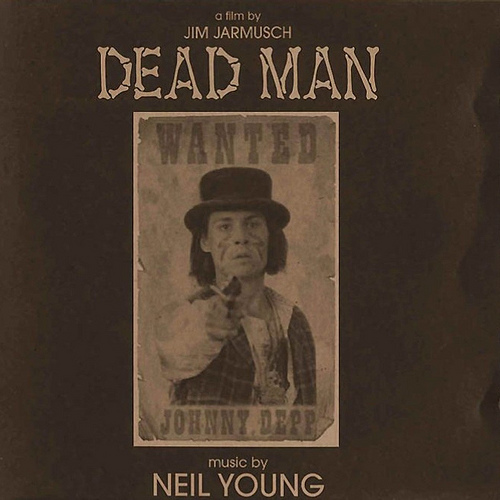
Young improvising alone to Jim Jarmusch's acid western. Mostly solo electric guitar with acoustic, piano and organ. Interleaved dialogue excerpts - seldom works but here yes - and Johnny Depp getting away with reading William Blake.
Maximally postmodern distant cousin to Cormac McCarthy's Border Trilogy. (On screen we meet characters called Benmont Tench and Lee Hazlewood (!)).
Music and film in black and white. Death's journey in mystic shades of grey.
The freedom of birds is an insult to me. I’d have them all in zoos. - The Judge